Did you know that trans people are allowed to be angry? On screen, too. Representation matters.
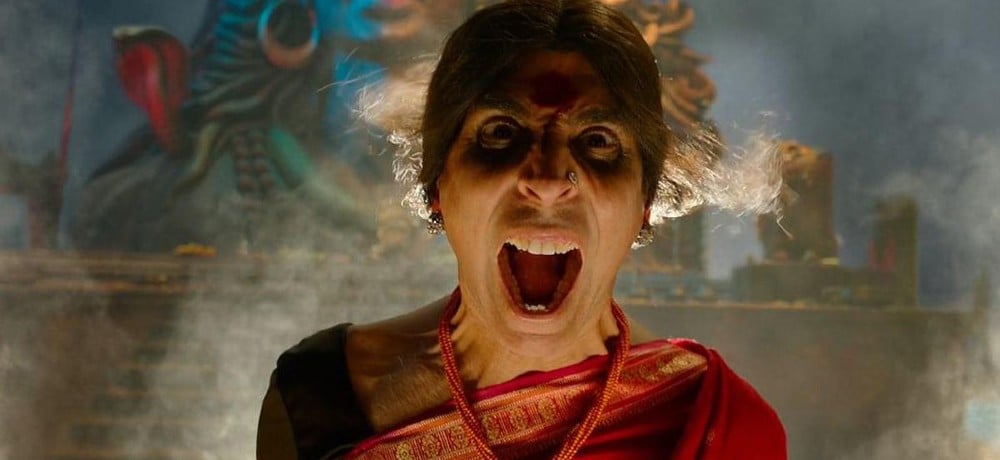
And I don’t mean tucked away in archives to be discovered 40 years later. I mean aggressively marketed, big-budget Bollywood horror films like Laxmii (2020).
This is the official Google logline:
“Aasif visits his wife’s parents’ house and happens to go to a ground that is supposedly haunted. However, he is soon possessed by the spirit of a transgender who is out for revenge.”
“The spirit of a transgender.”
Not a woman, person, or even a character. Just “a transgender.” Like an admin category with unfinished business. That is who is allowed to be angry.
“A transgender.”
“A ladyboy.”
“A confused child.”
A tragic cautionary tale covered in kajal.
Indian horror loves turning women and queer people into martyrs and metaphors, without ever learning anything from them. The queer body is rarely allowed to simply exist. It must suffer beautifully or haunt violently. Preferably both. Because rage is acceptable when it is fictional, contained safely behind a screenplay and can be exorcised before the credits roll.
Actual trans anger, though? Administrative anger? Political anger? The kind directed at a state attempting to narrow the definition of transness itself through legislation, conveniently around the time of census processes? Suddenly, everybody goes deaf.
The Transgender Persons (Protection of Rights) Amendment Act, 2026 is not just another piece of paperwork. It is a question of who gets to define another person’s existence, whose testimony is considered legitimate, and who gets to decide whether someone is allowed to be recognised as themselves. Which is fitting, really, because bureaucracy has always been one of the most effective horror genres in this country. Ghosts are temporary. Documentation is forever. And the timing being so close to the next census, is difficult to ignore. You can shove as much AI slop and propaganda into public circulation as you want; people still notice patterns.
For anyone who wants to read beyond the headlines, the Ambedkarian Chronicle’s analysis of the 2026 Act explores the relationship between the legislation, Brahminism, and the state’s regulation of trans identity. The legal text itself matters, too. Read what the Act actually says, who it recognises, and what it requires of the people whose lives it claims to protect. Because a law can call itself protective while making the people it supposedly protects fight for the right to exist within it.
And while we’re here, to every actor who passionately performed these wounded, raging, tragic trans figures onscreen: where exactly did that passion disappear when the Trans Act arrived? Should we have installed softer lighting in your hiding spots to make the silence more comfortable?
How legislature and media works in this country is a symbiotic relationship. Step one is to show enraged and dangerous marginalized people in movies to generations of citizens, two is to make sure it’s just enough to make them think about the horrors of what happens when social structure falls; but make sure you don’t encourage them to speculate what that structure is trying to keep at the margins or even push out.
India insists queer people are “Western imports” while constantly raiding its own mythology for gender fluidity whenever convenient. Explained wonderfully by Ruth Vanita here. I do think it’s also important to point out that homosexuality was first criminalised by Babington Macaulay, a coloniser. So I’d say that homophobia is the real Western Export.
Apparently, trans people do not exist outside of specific religious groups. Except when blessing newborns, performing ritual labour, or becoming symbolic vessels for spectacle. Then suddenly gender fluidity becomes sacred and the gods are complicated. Our civilisation has always known things that the people currently governing it would rather we forgot.
The problem with using mythology as proof of tolerance is that mythology is very good at making marginalised people useful. The moment that person asks for legal recognition, bodily autonomy, employment, safety or the right to be angry about being denied any of those things, the conversation changes. Suddenly, the same society that claims an ancient tradition of gender fluidity discovers a need for strict definitions.
And our haunted house has a Caste system.
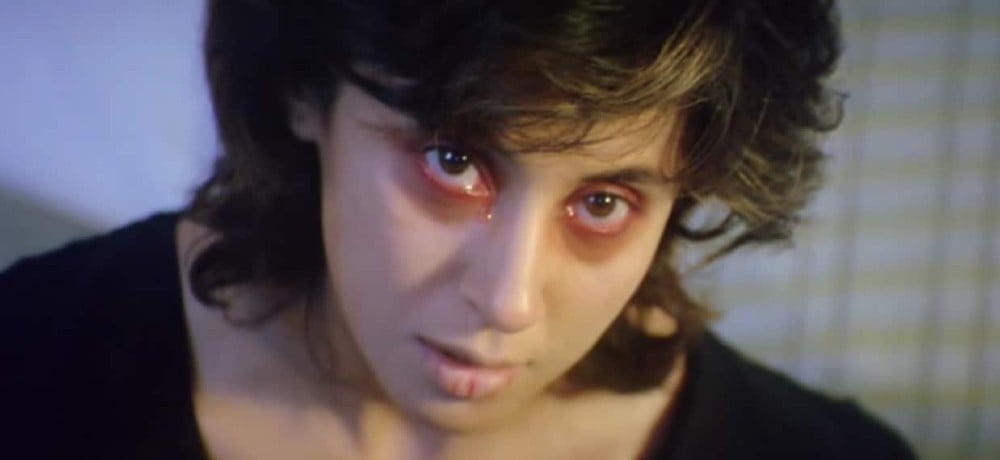
When the twist in films like Bhool Bhulaiyaa 3 is revealed to involve a wronged trans person, the audience is encouraged to fear the rage instead of interrogating what produced it. What happened to this person? What structures brutalised them enough for vengeance to become inevitable? Why is supernatural violence so much easier to accept than the violence that preceded it?
The trans figure becomes narrative pollution, something to contain. The goal is to restore the family and social order. At least on paper. Well, paper burns too.
But the more I think about Indian horror, the more I think the problem extends beyond trans representation. It is about the kinds of bodies that are permitted to occupy space, the kinds of labour that sustain that space, and the people who are expected to remain invisible so that everybody else can feel at home. Because the haunted house in Indian horror is rarely ever just a house. It is a family inheritance. A feudal estate. A domestic space where generations of wealth sit on generations of buried violence.
And who is usually doing the work of keeping that house alive? The servant who knows too much, the maid who enters private spaces like in Bhoot (2003).
The lower-caste labourer who cannot be fully excluded from the home because the home itself depends on their work. The person who is allowed inside the house to clean it, maintain it, serve its inhabitants, and disappear before the family sits down to dinner.
Indian horror repeatedly transforms social dependence into supernatural anxiety. The outsider enters the domestic sphere and suddenly the household becomes vulnerable. Not necessarily because the outsider is dangerous, but because their presence exposes how fragile the hierarchy actually is. That is where caste becomes impossible to ignore. Somebody owns the land. Somebody inherits the property. Somebody maintains the estate. Somebody is buried beneath it.
Take Tumbbad (2018). The film’s horror is built around inheritance, greed and the pursuit of wealth that can never satisfy its inheritors. The ancestral mansion and the village around it are not neutral backdrops. They are spaces shaped by property, lineage, and the desire to possess what should never have been possessed.
In Stree (2018), the female spirit’s violence is inseparable from the violence of the society that created her. She is remembered through fear, ritual and the stories men tell each other. The town has built an entire mythology around her, complete with warnings and rules designed to protect men from her presence.
But what happened to her before she became a legend? The film’s joke is that the men are terrified of a woman who comes looking for them, even as the town’s social arrangements have already determined what women are supposed to be. The spirit becomes a disruption of the very gendered order that the men take for granted.
A body can be central to the plot and still have no control over its own story. In both films, with the training we’ve had from the media, audiences are bound to be afraid of the wrong people. Same as when the patriarchy tells you to be afraid of Nikki and not Bear, from Obsession (2026).
And that is precisely why representation cannot end with the inclusion of a trans character, a caste-oppressed character, or a woman who is allowed to be angry for two hours before the narrative restores order. The question is what the story does with that anger.
Does it ask who benefited from the hierarchy that produced the violence? Does it recognise that the haunted house is not simply an unfortunate setting, but a system in which certain people have always been expected to serve and disappear?
Or does it turn the oppressed person into a monster, give the audience a good scare, and send everybody home?
And sometimes the horror is not even on screen.
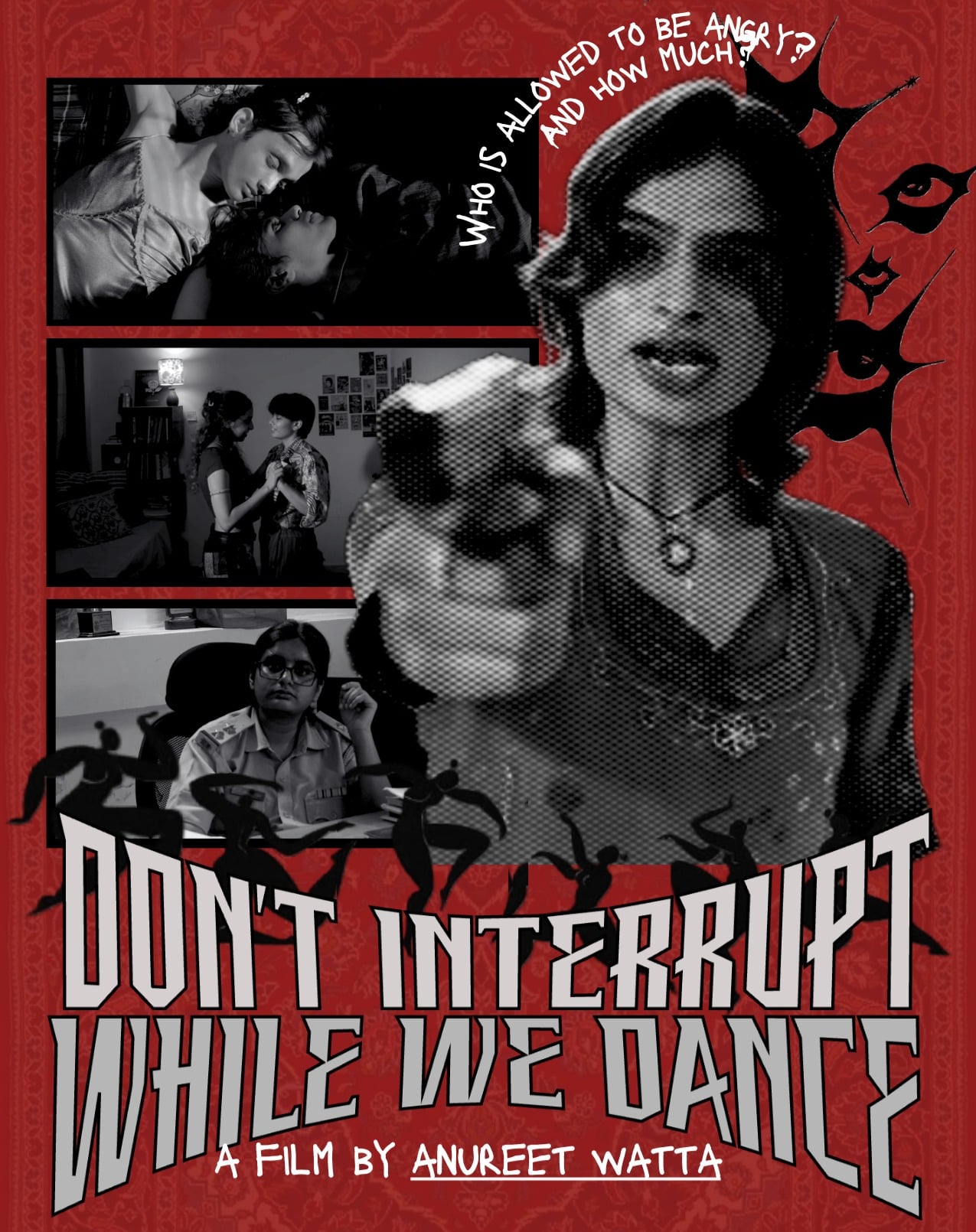
Filmmaker Anureet Watta described the contradiction of having their film, “Don’t Interrupt While We Dance” about trans joy and rage, screened at a government festival just as the Trans Act had been passed.
“The time during which this screening was to be held was very odd – I had just completed my film, and at the same time the Trans Act had just been passed. In this contradiction, to be viewed and consumed as a trans filmmaker was a dissonance – there was a validation for my art as it was being platformed at a government festival, meanwhile the state and its parliaments had decided trans people were not worth recognising or paying heed to.”
And then there was the screening itself.
“On the day of the screening, the film was to be showcased at 11 am at a PVR – which any independent filmmaker seldom gets an opportunity to watch their film being played in. Meanwhile, as I was getting dressed to catch my own screening, my friends (a cinephile in the truest of senses) had caught the film screening at 8am, with no audience but the projectionists and festival staff.”
The state can platform the image of a trans person while denying that person recognition outside the cinema. It can celebrate the art while refusing to listen to the artist. It can consume trans joy and rage as cultural production while treating actual trans people as an administrative problem. And what is an empty screening room if not another haunted house?
This is not an argument against making trans films, screening trans films, or platforming trans filmmakers. Quite the opposite. It is an argument against confusing visibility with material recognition, or cultural celebration with political equality.
A film screening is not a substitute for legal rights. Representation is not a substitute for safety. And a government festival cannot absolve the government of responsibility for the conditions under which the people it represents are forced to live.
The problem for governments, much like the problem for horror protagonists, is that the figure at the door is rarely as frightening as the reason they came back. Trans people are not emerging from nowhere. They are not a Western contagion. They are not a bureaucratic error. They are a reality that has always existed, no matter how many forms, surveys, censuses, certificates, or bills attempt to contain them.
Indian horror has spent decades teaching us to fear the disruptive body. Maybe it is time to ask a different question.
If the same people keep returning as ghosts, monsters and disruptions, perhaps the problem was never the bodies. Perhaps the problem was always the house.