
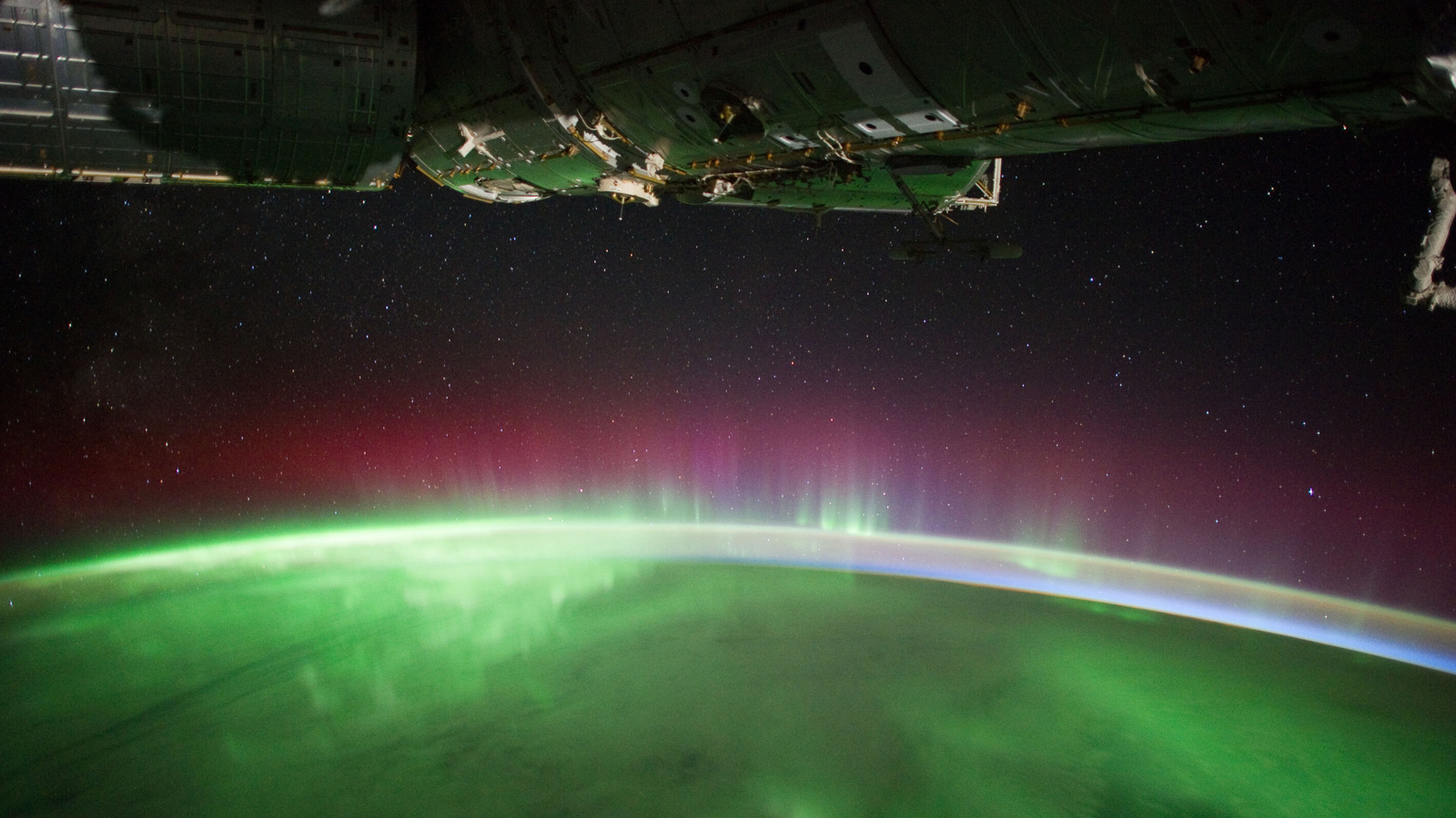
The northern lights could mean lights out for the infrastructure we rely on.
In 1989, the Canadian region of Quebec experienced something that likely shocked many of its residents: the Sun knocked out its power grid. Caused by a geomagnetic storm, the resulting blackout made six million people lose power for nine hours. Known as ‘the day the sun brought darkness,’ the blackout is emblematic of both the potential effects of solar activity on modern technologies and our relative unpreparedness for a major solar storm.
Solar storms are caused by magnetic reconnection, a process in which the Sun’s rotation forces its magnetic fields to twist and knot. As it undergoes its 11 year cycle, the pressure from these fields mounts. Eventually, these magnetic fields break and rejoin, whereby energy and plasma explode from the Sun’s surface into the solar system. Although invisible to the naked eye, solar storms can have a profound effect on Earth’s magnetic fields. And while the phenomenon is responsible for the aurora borealis, it can also wreak havoc on our technological infrastructure.
These eruptions cause three types of solar storms. Solar flares are intense explosions of light and radiation. Capable of producing energy equal to a billion hydrogen bombs, solar flares travel at the speed of light, hitting the Earth’s atmosphere in just eight minutes. Radiation storms, meanwhile, are eruptions of charged particles that blast through the solar system, reaching Earth in just half an hour. The largest, coronal mass ejections, or CMEs, are massive clouds of magnetized plasma. Each of these solar events can disturb the Earth’s magnetic field to cause geomagnetic storms that threaten power grids, disrupt communications systems and even down global internet infrastructure.
What happens when solar storms reach Earth?
Before diving into how solar storms affect technology, you first have to understand the geomagnetic basics. Once a solar storm reaches the protective magnetic region of the Earth’s atmosphere, known as the magnetosphere, its charged particles temporarily change the atomic and magnetic makeup of the Earth’s atmosphere, disturbing its magnetic fields, currents and plasma.
Like the solar events themselves, these disturbances can be divided into three broad categories. Coronal mass ejections, for example, can cause geomagnetic storms which send geomagnetically induced currents (GICs) through the Earth’s magnetic field lines toward the southern poles, where they can surpass the Earth’s atmospheric defenses and disrupt technological systems. Intense solar winds can also generate geomagnetic storms. Similarly, radiation storms send highly charged proton particles down these magnetic field lines, forcing radiation into the lower levels of Earth’s atmosphere. Solar flares, for their part, can cause a phenomenon known as radio blackouts, through a process called ionization, in which magnetically charged particles blast through the atmosphere, dislodging electrons from atmospheric molecules and thereby changing the trajectory of radio frequencies.
The National Oceanic and Atmospheric Administration grades all three of these solar storms on a scale from one (minor) to five (extreme). Although solar activity is common, the vast majority of solar storms are recorded on the lower ends of the spectrum. For instance, while minor events may occur almost 3,000 times during an 11 year cycle, we’re likely to see less than five extreme solar storms over that period. However, even the largest storms on record pale in comparison to their historical predecessors. But we’ll get there. For now, let’s focus on what technologies are at risk.
Power Grids
As evidenced by the geomagnetic event that caused the infamous Quebec blackout, strong solar storms can have a major effect on the world’s power grids. When geomagnetically induced currents hit electrical infrastructure, they can cause blackouts by overheating transformers, relays and sensors. Expensive and difficult to manufacture, replacing a critical mass of transformers could take years. Geomagnetic currents can also overload and damage grid systems’ transmission lines. The control and protection infrastructures through which we manage power grids are also vulnerable to geomagnetic currents. Over time, these storms can shorten the lifespan of grids by damaging their electrical components and insulating materials, causing noticeable wear.
Not all power grids are threatened by solar storms equally, as several environmental factors shape whether grids are more susceptible to solar storms. For one thing, geomagnetic storms are geographically prejudiced. Because storms are drawn toward the Earth’s magnetic poles, latitude is the most consistent indicator of risk, with arctic regions seeing the strongest magnetic disruptions. In 2003, for instance, Sweden saw a portion of its power grid knocked out by a series of abnormally potent geomagnetic activity. Soil resistivity, which refers to how well the ground conducts electrical currents, is another factor. Areas with high likelihood of exposure whose soil conducts energy well are particularly at risk. For example, the arctic regions between 55 and 70 degrees latitude, are especially vulnerable, given their high latitudes and resistivity rates.
Increasingly, experts are concerned about the risks solar storms pose to artificial intelligence and other grid-needy industries. And while the AI boom is already straining our electrical infrastructure, the costs of widespread grid outages could prove catastrophic for the world’s fastest growing industry. Writing for Space News, Scot McIntosh, a former deputy director of the National Center for Atmospheric Research, said AI executives are “among those who should be most concerned” about the knock on effects of solar storms.
Satellites
Although satellites are designed to withstand solar weather, protecting them from the strongest solar events is costly and impractical. As such, solar storms can damage a satellite’s hardware and internal electronics. Such damage can reduce a satellite’s lifespan or potentially necessitate critical repairs.
A satellite’s software is also at risk. As Russell DeHart, a lead engineer at NASA’s Goddard Space Flight Center, describes it, high-energy particles can “end up hitting a computer chip aboard a spacecraft and cause a [computer programming] bit to flip,” prompting an “anomaly” known as “a single event-upset.” In essence, high-energy particles from a solar radiation storm can physically force the sequences of 0s and 1s that make up the program’s binary code to switch properties. If key operations experience a bitflip, it forces the satellite to suspend noncritical tasks until the issue is resolved.
CMEs typically heat and expand the atmosphere, creating a denser medium for satellites to pass through. This additional drag can force satellites to lose both speed and altitude, dropping up to 2,000 feet. Losing a few thousand feet while in an orbit over a thousand miles high may not seem like a disaster. But considering that satellites are precisely calibrated machines, the drop could be substantial enough to stop operations entirely.
Complicating the issue is that low Earth orbit is increasingly crowded. Changes in altitude risk collisions with other satellites or space debris. And while most satellites have extra fuel to maneuver back into place, deploying it can cut down a mission’s lifespan. As Dehart notes, “you can see years shaved off” a satellite mission “if a solar cycle was more active than originally anticipated.”
Many satellite-dependent technologies are susceptible to these disruptions. For instance, a solar storm in 2022 knocked 38 SpaceX internet satellites out of orbit. In October 2003, meanwhile, a flurry of solar activity scrambled half of the world’s satellites. The storms grounded flights between North America and Asia, muddied TV and radio broadcasts, upended remote GPS systems, and curbed several scientific missions. As more of our technological infrastructure continues to migrates to low Earth orbit, such concerns are likely to become more acute.
Radio communications
It goes without saying that satellite issues can disrupt a host of communication technologies. Navigation systems, like GPS, which depend on the exact positioning of a satellite and geographic coordinates, can be discombobulated by a sufficiently large solar storm. Just ask the farmers whose GPS-enabled tractors were knocked off-kilter by a solar storm in 2024, causing a reported half a billion dollars in damages. The same can be said for many satellite-dependent communications systems.
Beyond physical damage to satellites, however, solar storms can hurt satellite communication systems by changing the atomic makeup of the Earth’s atmosphere. As mentioned earlier, solar flares, CMEs, and solar radiation storms can all have a pronounced effect on the Earth’s ionosphere. Radiation storms, for one, can block the passage of radio waves at high altitudes. Ionization caused by solar flares and coronal mass ejections, meanwhile, causes the Earth’s ionosphere to either absorb or refract different radio waves. These changes in wave pathways can upend GPS and other satellite-dependent navigation systems that need frequencies to pass through the ionosphere.
Radios that use high frequency radio waves, also known as shortwave radio, meanwhile, utilize the Earth’s ionosphere to refract radio frequencies and extend signal range. Typically used by operators who need to communicate beyond the horizon, shortwave radio systems are deployed by deep sea vessels, aircraft, emergency rescue crews and military personnel to communicate over vast distances. Changes in the ionosphere alter the angle of refraction, making it difficult for radio transmissions to reach their intended receivers. Very High Frequency and Ultra High Frequency radio communication systems, for their part, are more resilient to geomagnetic storms because they don’t depend on ionosphere refraction.
Satellite disturbances can affect popular consumer devices. According to a report by IoT manufacturer Memfault, a string of storms in 2024 potentially caused malfunctions in roughly 2.5 million of their devices. Luckily, solar events should only have a minimal impact on consumer cellular service, since the radio waves used by wireless networks are largely unaffected by ionization. Likewise, your phone’s GPS signal triages cellular tower location data with satellite GPS, limiting their exposure to satellite disruptions. However, many of these caveats likely go out the window in the case of catastrophic storms that decimate the power grids cellular networks depend on.
Internet
Some warn that a massive coronal mass ejection could also damage the world’s internet infrastructure. Dr. Sangeeth Abdu Jyothi, a professor and researcher at UC Irvine, released a 2021 paper detailing how a solar storm could cause a worldwide “internet apocalypse.” According to Jyothi, solar storms threaten the submarine fiber optic cables that give the world wide web its name. And while local and regional networks are likely safe, the cables that carry data between continents remains under threat.
To understand this distinction, we need to dive into the fiber optic deep end. For the sake of brevity, think of internet data as pulses of light beamed through thin strands of glass, which are known as fiber optic cables. The global internet is underpinned by roughly 870,000 miles of these cables, which carry data across the ocean floor. Interestingly, the fiber optics themselves are immune to GCI-induced outages. Unfortunately, light signals disperse as they travel long distances. To remediate this issue, signal repeaters are placed every 30 to 100 miles to amplify the optical signal. According to the NOAA, over 95% of international data is routed through these subsea cables.
Unfortunately, the electronic components of optical repeaters are vulnerable to geomagnetically induced currents. According to Dr. Jyothi, a sufficiently large CME could render many of these cables unusable, striking a blow to global internet infrastructure. Add potential damage to satellite internet systems, and a major solar storm could substantially slow internet traffic.
Notably, the study finds that some regions are more susceptible to the “internet apocalypse” than others. As with power grids, GCI damage to internet cables will likely correlate with latitude. The long distance cables connecting the U.S. to Europe are most at risk, while internal communications in Asia and Europe are comparatively insulated.
Preparing for the worst
Modern technologies have yet to encounter a historically strong geomagnetic storm, as the strongest recorded occurred in 1859. Known as the Carrington Event, the storm was three times larger than the one that knocked out the Hydro-Quebec electrical grid, and caused the Northern Lights to stretch as far south as Panama. What technology we did have, namely telegraph machines, went haywire, with some even catching fire. Scientists worry that such a storm could cripple our modern technological ecosystem, stranding planes, downing power grids, breaking internet connections and disrupting global communication systems.
Those looking to prepare for a major solar storm can ensure access to essential electronics through a variety of home products. For instance, generators are increasingly efficient, come in variety of sizes and prices, and are ideal for sustained power generation. Solar powered home battery backups, such as Anker’s Solix E10 or Tesla’s Powerwall, meanwhile, are eco-friendly alternatives capable of buoying power supplies for a few days. For more mobile options, portable power stations can pack a significant punch into a smaller package, while uninterruptible power supplies, or UPS, can be an affordable means of delivering power to essential electronics.
Luckily, storms like the Carrington Event occur only twice a millennia. However, even the Carrington Event is historically benign. Scientists found evidence of solar events that dwarf the 1859 storm by measuring the levels of carbon-14 in arctic ice samples. The largest of these are dubbed Miyake events, and one that occurred in 774 AD is hypothesized to have been 12 times larger than the Carrington storm.
Some scientists warn that a catastrophic storm is inevitable . As reported by the Washington Post, the National Academy of Sciences believes a geomagnetic disaster could cost over $2 trillion. Bolstering the world’s satellite, internet, communications and power infrastructure is likely to incur major financial costs. For example, the Foundation for Resilient Societies projects that securing the U.S. national power grid would cost roughly $255 billion alone. And although NASA has invested in detecting geomagnetic storms, a 2025 report by NOAA found that our solar forecasting systems also need upgrading. Addressing these issues will likely require extensive international cooperation. But given the relatively low year-to-year chances of a geomagnetic disaster, it remains unlikely that the world’s governments will collectively counteract them with the urgency some advocate. If you don’t believe me, just ask your local climate activist.