
If you’re one of the lucky ones who’s been watching Interview with the Vampire on AMC since its 2022 premiere (we are, in fact, an elite club), then you already know a few things to be true:
Louis and Lestat are not only the hottest couple on television, but they have some of the most electric chemistry we’ve seen in years. Every episode is impeccably written, acted, and produced, devastating and beautiful in equal measure. The character crashouts? Iconic, for better and worse. Delainey Hayles gave us a Claudia who shattered our hearts even when we knew exactly where her story was headed — and one whose presence will haunt this narrative for the rest of its run. And Jacob Anderson and Sam Reid? Together and apart, they’ve made Louis and Lestat two of the most compelling characters on television right now.
But perhaps nothing is more universally true than the fact that these hiatuses make us a little… feral. And this one — leading into Season 3, The Vampire Lestat — has been especially brutal.
Now, with the premiere less than two months away, something incredible has finally happened: the official trailer has arrived!
We’ve had a treasure trove of crumbs since San Diego Comic-Con 2025, but overall, AMC has kept things tightly under wraps. Just enough to keep us desperate for more. And now? Now we have it. Well… kind of.
Dropped on April 22 at noon EST, the two-minute trailer offers only a fraction of what’s to come when the season premieres on June 7, but do not let the runtime fool you. It’s dense, chaotic, and absolutely packed with moments worth dissecting. So naturally, that’s exactly what we’re about to do.
If you’re new to the show, or the books (which will absolutely be part of this breakdown), I’ll try to keep things as accessible as possible. I’ll also link out to a few previous pieces that can help fill in any gaps. And if you haven’t caught up yet, both seasons are currently streaming on AMC and Netflix. Just saying.
There’s simply, however, too much happening in this trailer to do it justice in a single piece. So we’re taking it one element at a time, and we’re starting with the music. A full breakdown of the video content of the trailer is coming next.
The Vampire Lestat and “Dancing With Myself”
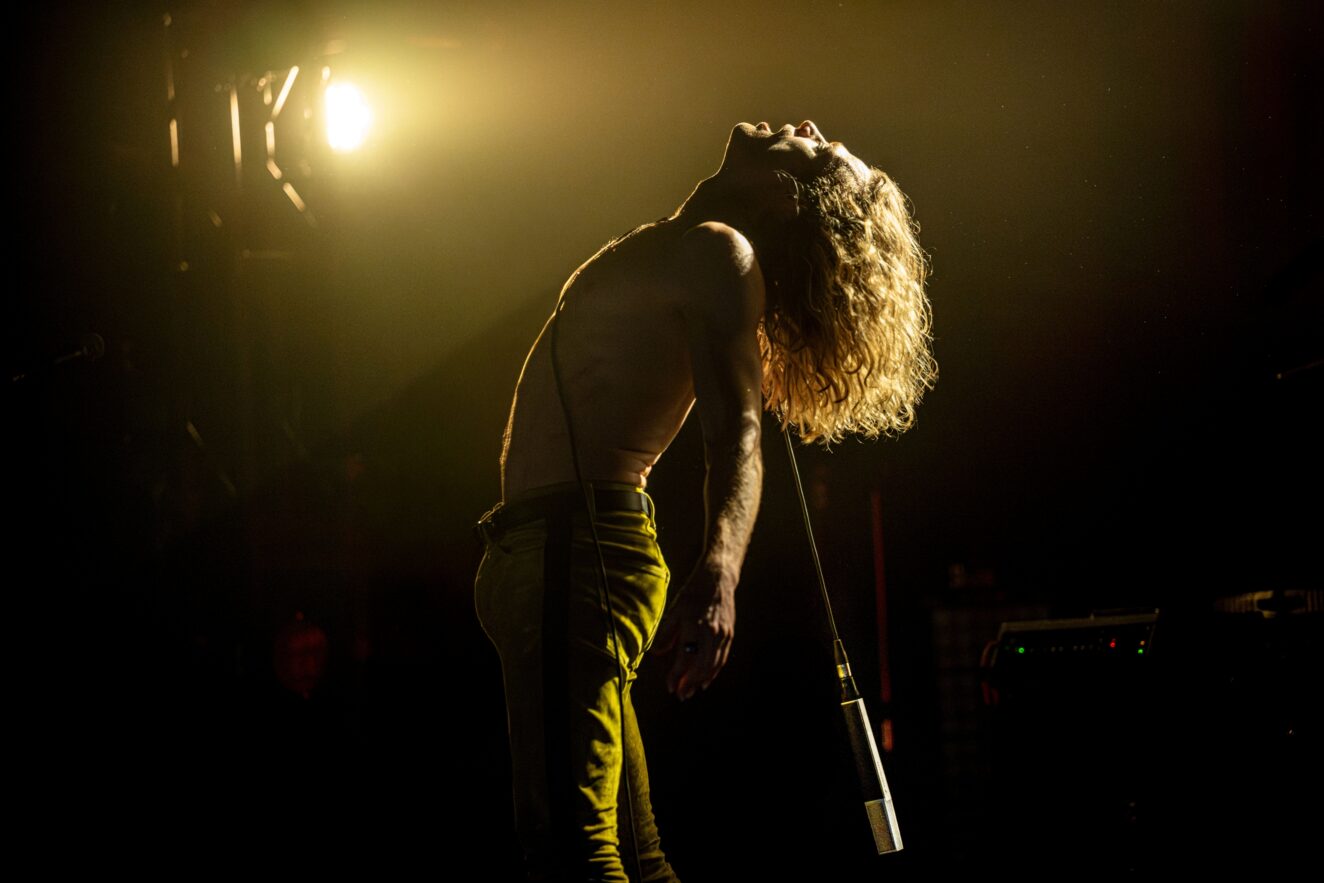
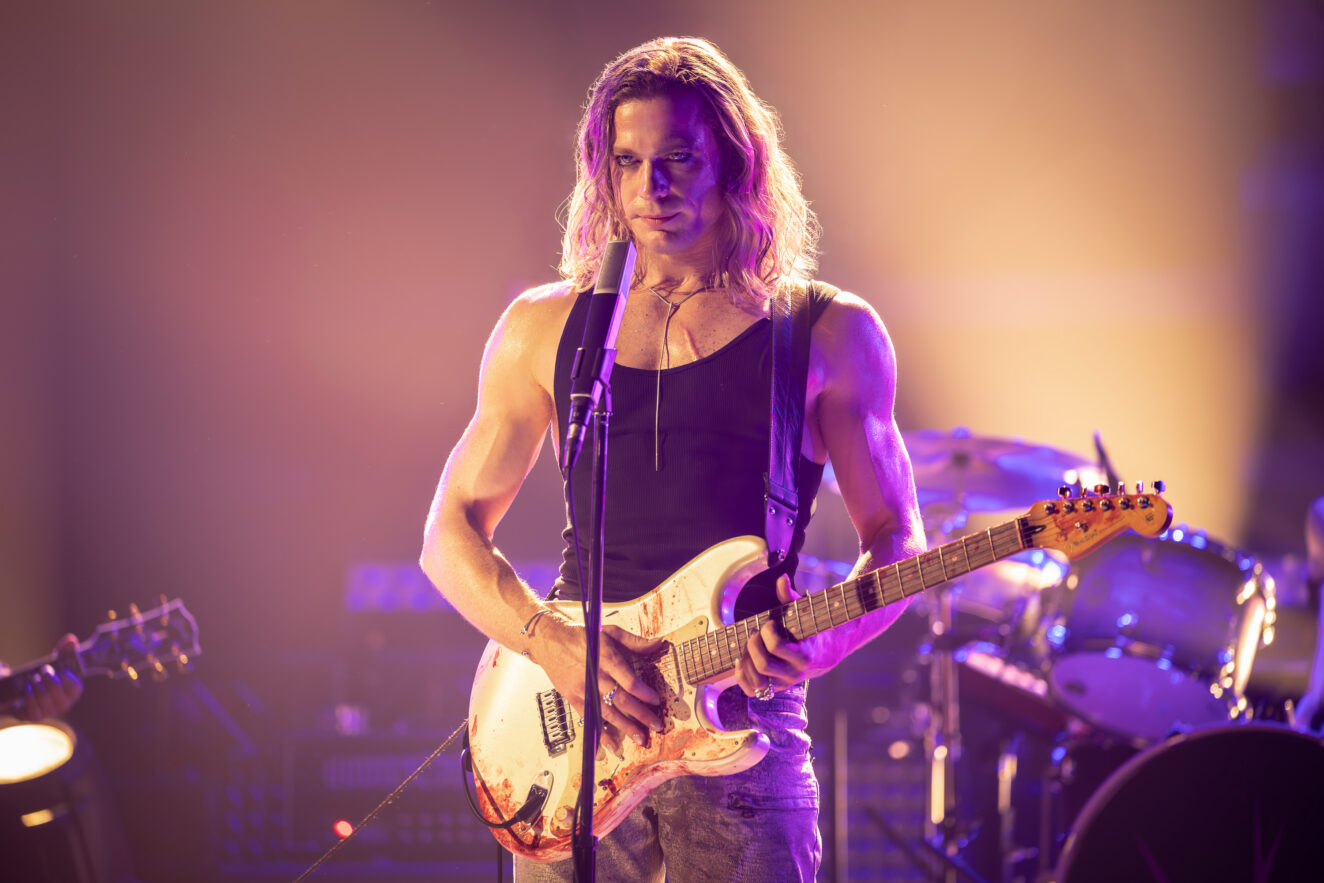
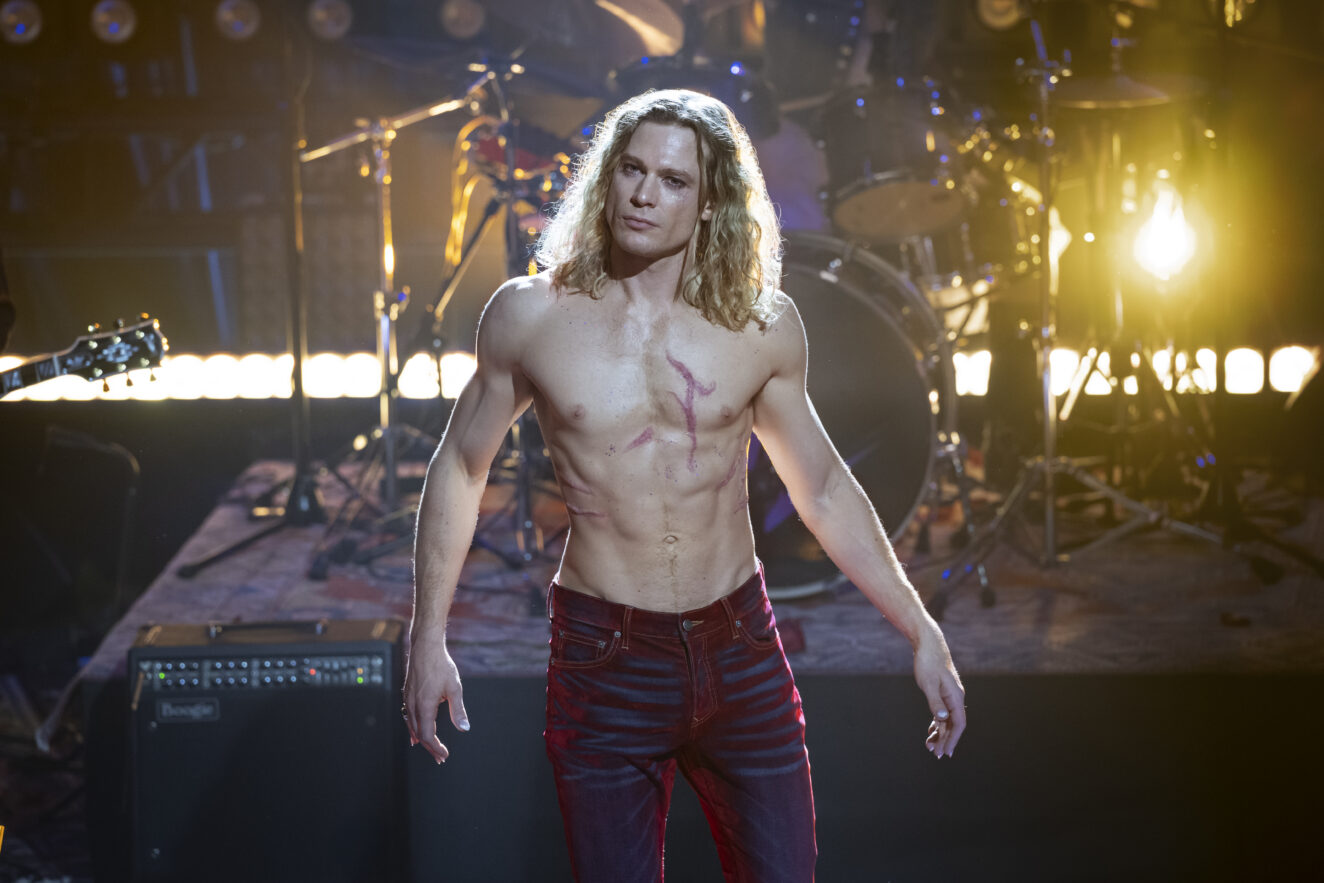
The Vampire Lestat— the fictional band fronted by Lestat de Lioncourt (Sam Reid) — isn’t just a narrative device this season. It’s becoming real, with original songs expected to release alongside the show, many of them written and produced by composer Daniel Hart, whose work has already been integral to the identity of the first two seasons — more on him, and the team behind this sound, very soon.
“Dancing With Myself” emerged from the post-punk scene of the late 1970s and helped define the rise of new wave in the early ’80s, a genre that softened punk’s aggression into something more commercially accessible without losing its sense of alienation. It’s glossy, performative, and deeply solitary all at once, which, frankly, makes it perfect for Lestat.
And yes, I would pay an embarrassing amount of money to hear him cover the synth-pop/new wave-esque song “Personal Jesus” by Depeche Mode, but that’s neither here nor there.
It goes without saying that the team behind The Vampire Lestat isn’t choosing songs without purpose, and beyond Reid’s voice fitting really well tonally with Idol’s, the lyrics to the song seem especially befitting a certain crashing rockstar in the modern era.
A few lines in particular stand out:
- Oh, when there’s no-one else in sight / In the crowded lonely night / Well, I wait so long for my love vibration / And I’m dancing with myself
- When there’s nothing to lose and there’s nothing to prove
- Well, if I looked all over the world / And there’s every type of girl / But your empty eyes seem to pass me by / Leave me dancing with myself / So let’s sink another drink / ‘Cause it’ll give me time to think / If I had the chance, I’d ask the world to dance / And I’ll be dancing with myself
Taken together, the song circles three central ideas: loneliness, performance, and the absence of meaningful love.
Loneliness
If there is a single emotional constant in Interview with the Vampire, it’s loneliness. But for Lestat, it’s not just a theme. It’s a driving force behind many of his choices, good and bad.
We hear it articulated explicitly as early as Season 1, Episode 2 (“…After Phantoms of Your Former Self”), in a scene near the end of the episode (though it was the very first scene Anderson and Reid filmed together) when Lestat confesses to Louis:
“There is one thing about being a vampire that I most fear above all else and that is loneliness. You can’t imagine the emptiness… A void stretching out for decades at a time. You take this feeling away from me, Louis. We must stay together and take precaution and never part.”
It’s a quiet, romantic moment with the two, but its undeniable romance does not take away from the fact that it also reads as a warning.
Because Lestat’s fear of being alone doesn’t manifest gently. It curdles into control, volatility, and, eventually, violence. By Episode 5 (“A Vile Hunger for Your Hammering Heart”), that fear has escalated into something far more dangerous. Claudia’s return — and her plan to leave again, this time with Louis — pushes Lestat into a full emotional rupture. What follows is one of the most brutal sequences in the series: his attack on Claudia, Louis’ intervention, and Lestat dropping Louis from the sky in an act that is as much about desperation as it is cruelty.
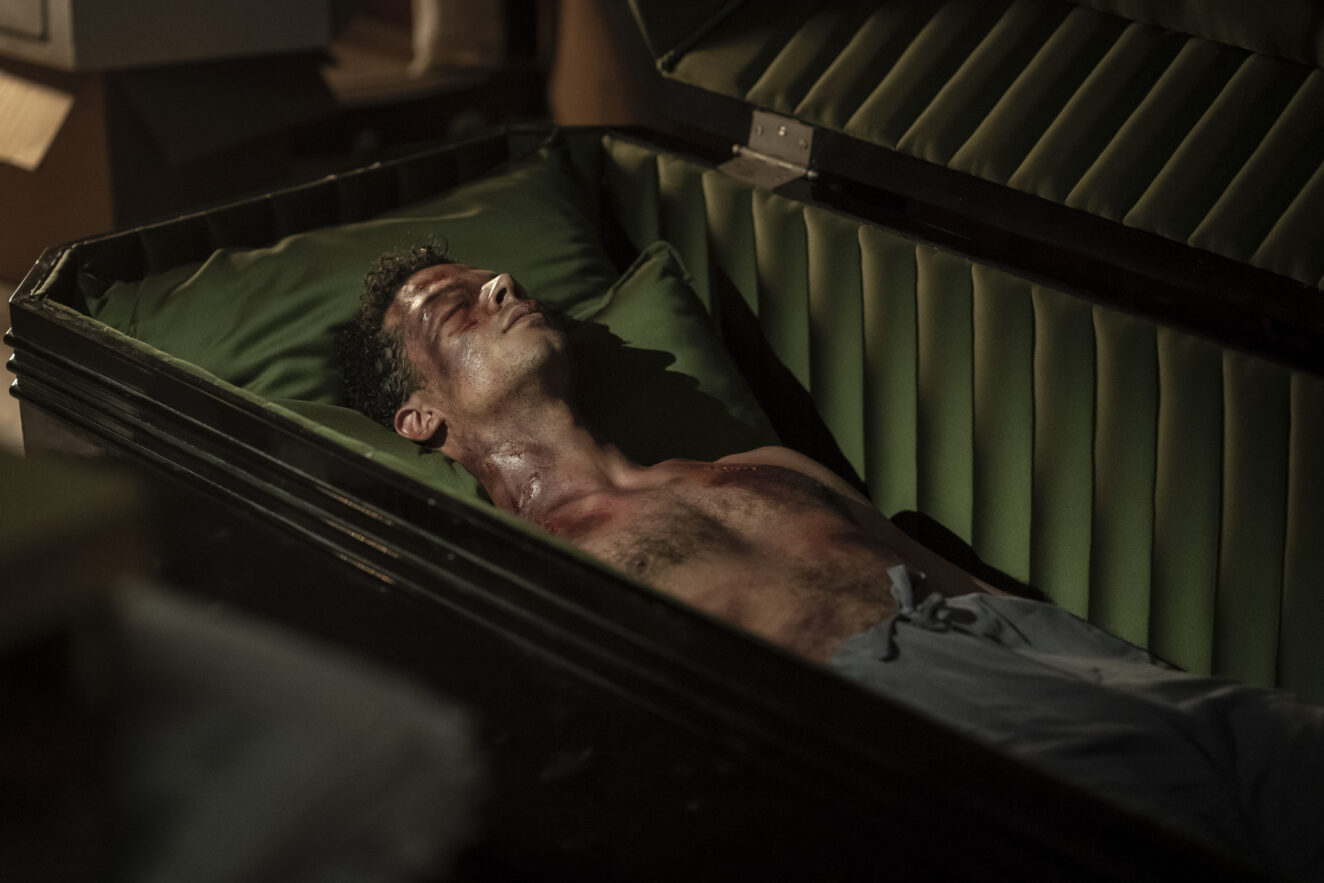
That moment isn’t just about rage, but terror. Specifically, its about the terror of abandonment.
And that terror didn’t start with Louis.
As outlined in The Vampire Lestat (1985) by Anne Rice, Lestat’s human life was defined by instability, neglect, abuse, and emotional distance. His mother, Gabrielle (Gabriella in the show — and yes, we’ll get into that later… yikes), the one person he feels closest to, remains consistently cold and ultimately leaves him more than once. His first relationship, Nicolas “Nicki” de Lenfent (which also… yikes), rejects both his worldview and, eventually, him. And even Armand later tells Lestat outright that he is destined to be abandoned by those he creates.
So when immortality stretches that pattern across decades — and, now, centuries — the result is exactly what “Dancing With Myself” captures: being surrounded by people, yet fundamentally alone.
And that’s one aspect that makes the trailer’s use of this song so telling.
Because if what we’ve seen so far is any indication, between the IGN clip, the tension within his band, and the ongoing-fractured state of Louis and Lestat’s relationship, Lestat’s rise to rock stardom isn’t going to resolve that loneliness.
It is probably going to make it worse.
He may be performing for thousands. Worshipped, even. But if those connections are hollow — fans, bandmates, an audience projecting onto him rather than knowing him — then the image becomes painfully clear:
Lestat, center stage, and still dancing with himself.
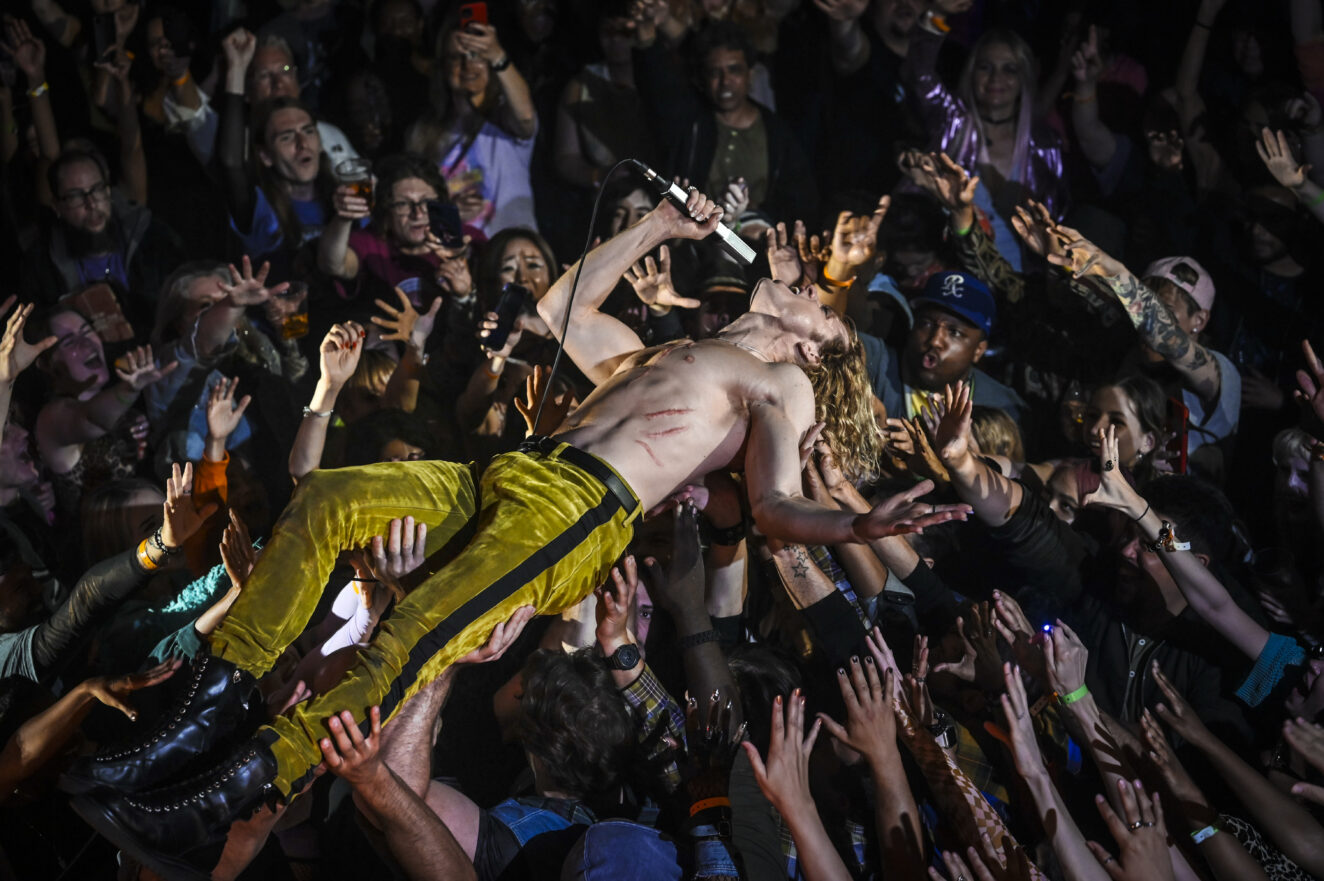
Performance
We’ve known since the very beginning that Lestat is a performer.
In Season 1 alone, he’s constantly putting on a show: playing piano at the Azalea, much to Louis’s reluctant fondness (Episode 3, “Is My Very Nature That of the Devil?”); staging theatrical displays in their home on Rue Royale for Louis and Claudia (Episode 4, “…The Ruthless Pursuit of Blood With All a Child’s Demanding”); and, of course, presiding as King of Mardi Gras, traumatizing the people of New Orleans more than once throughout the night for his own happiness (Episode 7, “The Thing Lay Still”).
Even beyond that, Season 2 gestures toward his past on the 1700s Parisian stage in Episode 3, “No Pain” — though the truth of those performances remains… questionable (looking at you, Armand (Assad Zaman). Where is Lelio?).
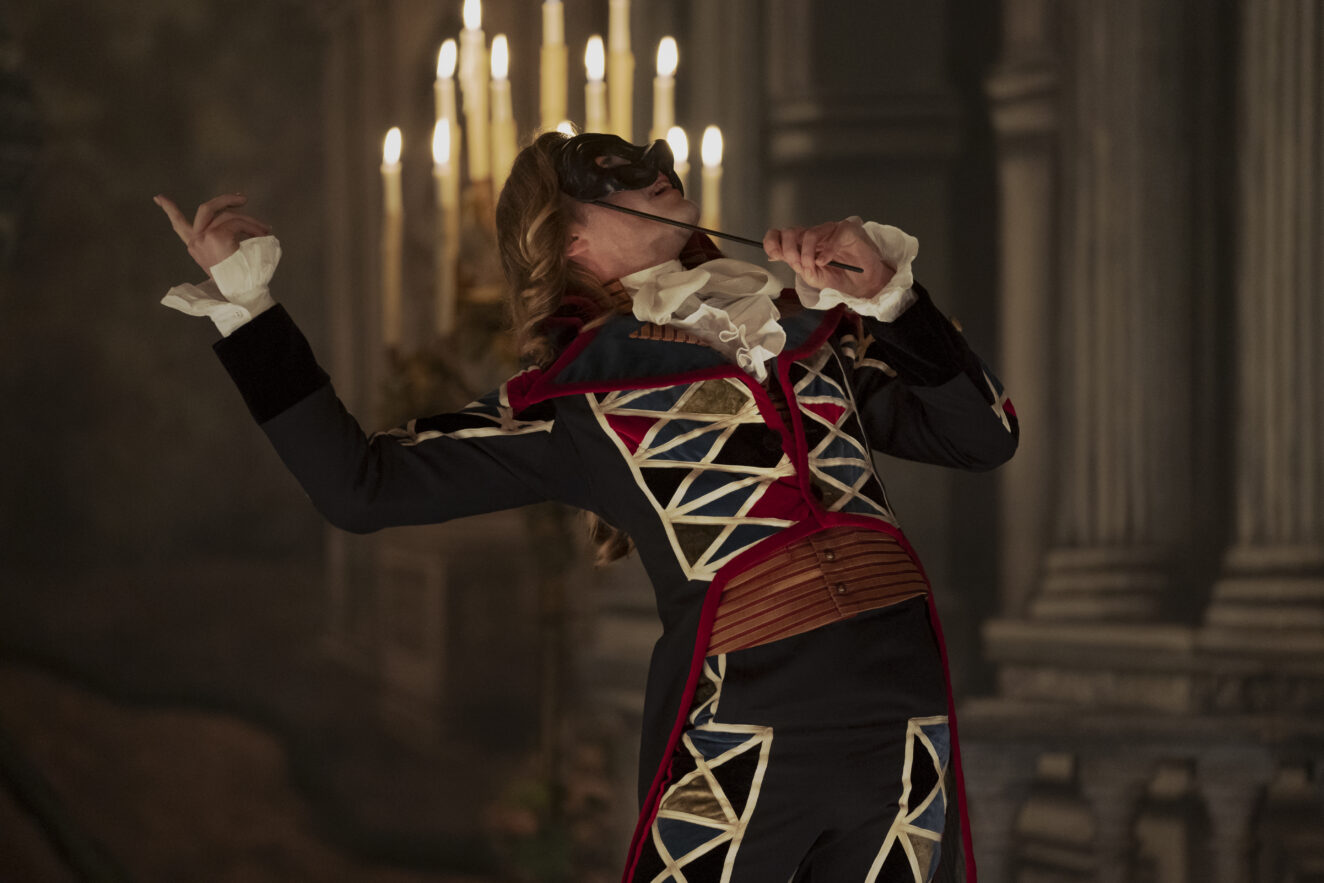
But performance isn’t always just about literal showmanship.
It’s about presentation. It’s about control. It’s about the version of yourself you choose to project. And, even more importantly, what that projection allows you to hide.
And Lestat is always performing.
He presents himself as open, indulgent, impossible to ignore, but that openness is often a kind of sleight of hand. It allows him to dazzle while withholding, to dominate the narrative while obscuring the truth. The trailer leans hard into this idea, framing his rockstar persona as something exaggerated, almost artificial. He’s louder, brasher, more overtly provocative than ever before.
Which brings us back to the lyrics:
When there’s nothing to lose and there’s nothing to prove…
On the surface, that line reads like a freedom of sorts. But in this context, it feels more like a performance of certainty than the real thing.
Because The Vampire Lestat novel is steeped in Lestat’s need to define himself, to control how he’s seen, and to rewrite his own narrative. And given where the show has left him — his fractured relationship with Louis, the weight of Claudia’s death, the lingering guilt and denial — it’s hard to read “nothing to lose” as truth.
If anything, it sounds like someone trying very hard to believe it.
The same goes for “nothing to prove.” Because Lestat is, in many ways, still trying to prove everything: his power, his independence, his monstrosity, even his worthiness of suffering. That famous line —
“Oh Lestat, you deserved everything that’s ever happened to you…”
The Vampire Lestat, Page 436
— doesn’t read as acceptance so much as self-condemnation. A performance of self-awareness that never quite resolves into peace.
If the music is any indication, this rockstar era isn’t about actual liberation. The persona gets bigger, louder, more undeniable, but the cracks underneath it widen just as quickly.
The performance can only hold for so long.
And when it finally falls apart, as the season’s hints of a “rise and fall” suggest it inevitably will, it won’t simply just collapse, but will force whatever is being hidden into the spotlight instead.
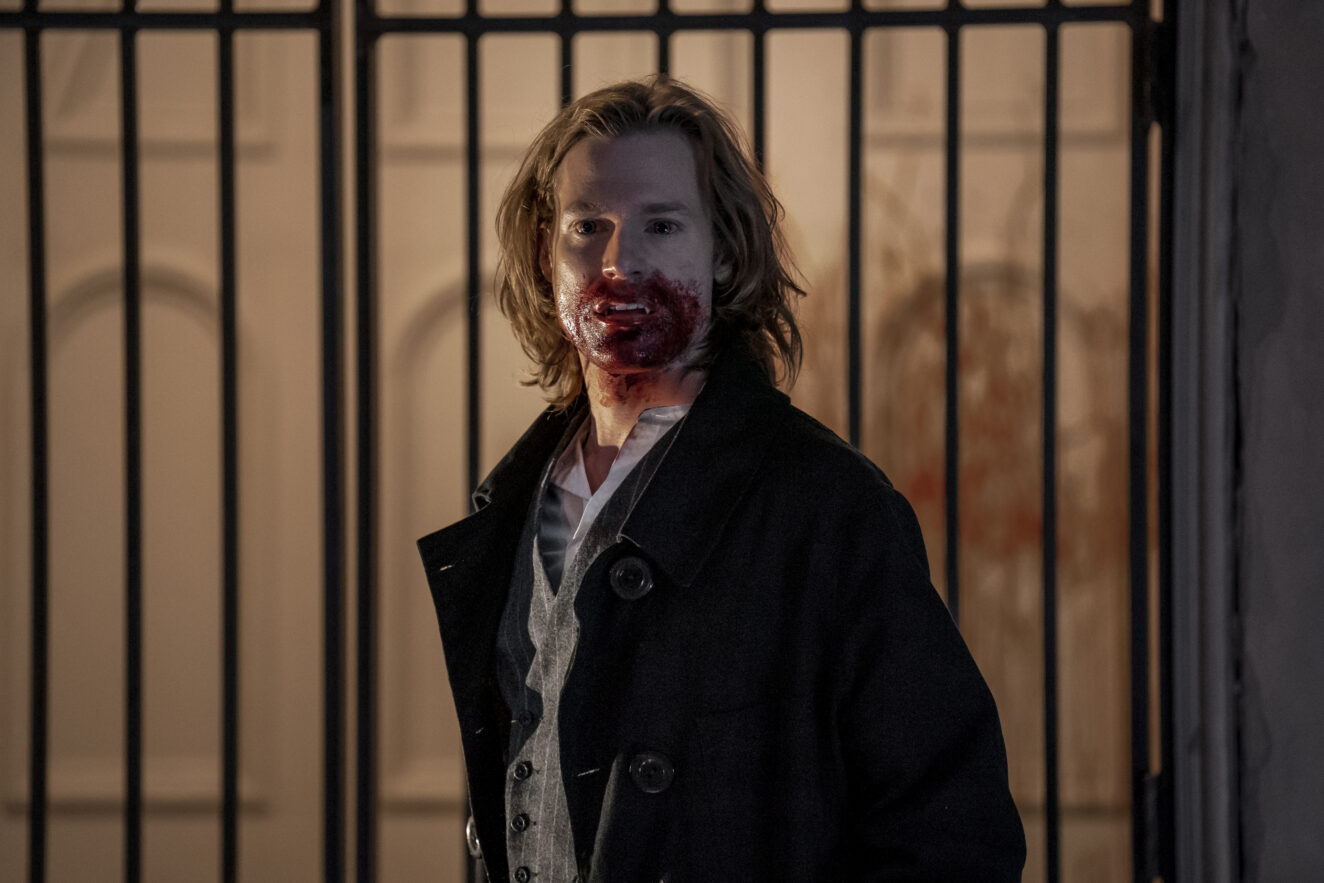
Absence of Meaningful Love
Last, but certainly not least — and arguably most important — is the absence of meaningful love.
Like loneliness, this is a theme deeply embedded in Interview with the Vampire. But what “Dancing With Myself” highlights is something more specific: not just the loss of love, but the inability to access it, even when it exists.
And that’s where Lestat and Louis become central to the song’s meaning.
From what the series has already shown us, their relationship is not only the emotional core of the story, but the most real and significant connection either of them has ever had. Season 1 makes that clear, even when it’s at its most volatile. Season 2 reinforces it even further by showing us that even though Lestat may be “gone,” he never leaves the narrative. He lingers in Louis’ mind, shaping his choices, haunting his relationship with Armand, and ultimately highlighting a truth the show never lets us forget, which is that nothing Louis builds in Lestat’s absence comes close to what they had together.
Which makes the song’s fixation on unfulfilled connection hit even harder.
Because if “Dancing With Myself” is about longing for something just out of reach, then it maps almost too neatly onto where this story leaves them — separated, fractured, and, for all intents and purposes, withholding love from one another.
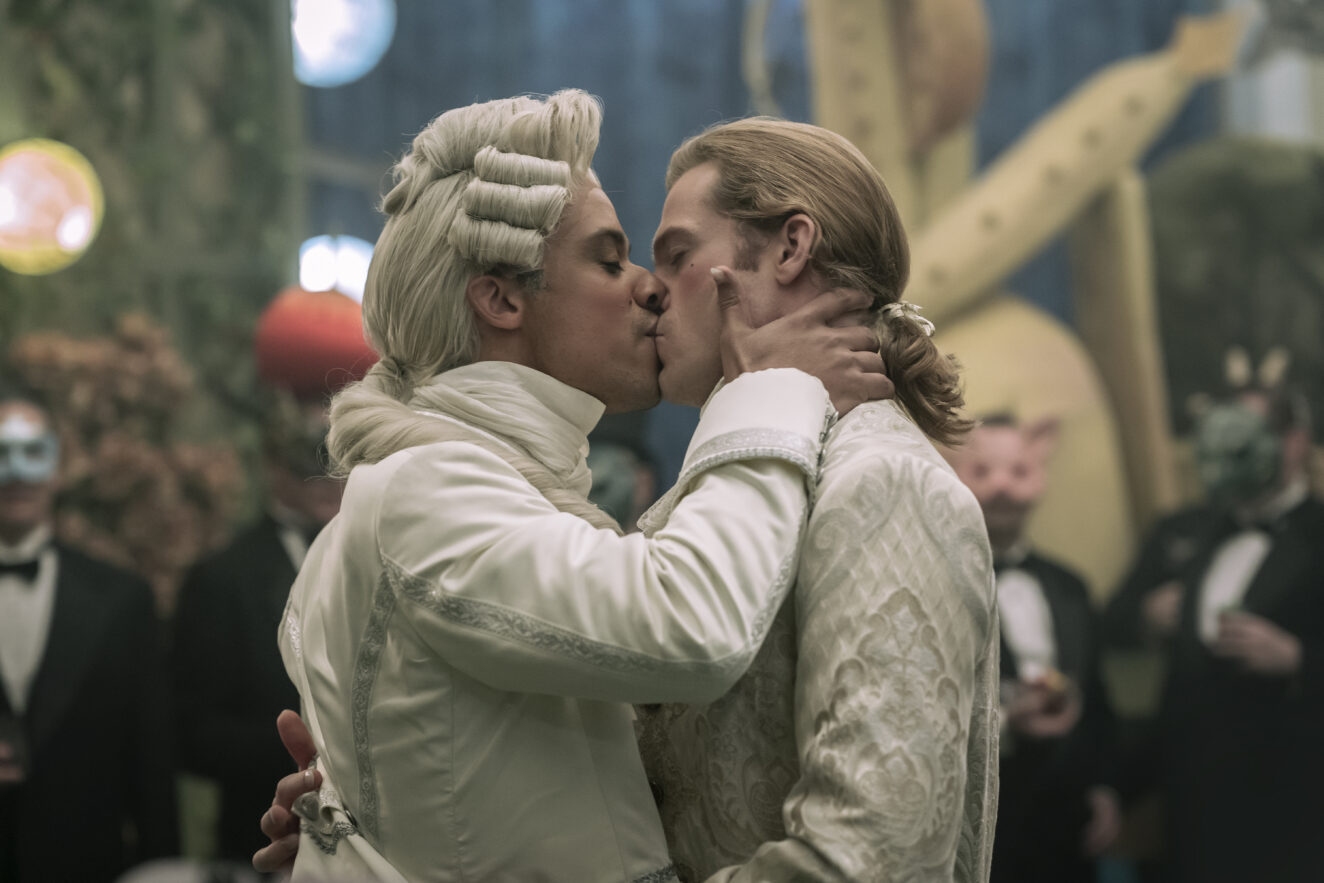
And from Lestat’s perspective, that absence is everything.
As explored in The Vampire Lestat and later novels, Louis is not just a great love; he is the love.
There are countless passages that reinforce this, moments where Lestat’s fascination, devotion, and emotional connection to Louis border on overwhelming. Some of my favorite passages include, but are not limited to:
- “Yet Louis gained a hold over me far more powerful than Nicolas had ever had. Even in his cruelest moments, Louis touched the tenderness in me, seducing me with his staggering dependence, his infatuation with my every gesture and every spoken word.” — The Vampire Lestat, Page 433
- “It was the love of Louis which had at times crippled Lestat, and enslaved Armand. Louis need not have consciousness of his own beauty, of his own obvious and natural charm.” — Merrick, Page 142
- “[Louis’] beauty had always maddened me. I think I idealize him in my mind when I’m not with him; but when I see him again I’m overcome.” — The Tale of the Body Thief, Page 106
But it is even more apparent, even more all-consuming, in the show. Lestat’s love of Louis is undeniable, again, despite their past. From the very first moment he saw Louis in Season 1, Episode 1 (“In Throes of Increasing Wonder”), the attraction was evident, but as the episode and season progress, it is clear that Lestat’s love for Louis is what, quite literally, keeps him going in this immortal life.
Which is exactly why the lyrics land the way they do.
Well, I wait so long for my love vibration / And I’m dancing with myself…
and
If I looked all over the world… but your empty eyes seem to pass me by…
These lines don’t just suggest loneliness, but waiting. Waiting for a specific kind of love, one that isn’t interchangeable, one that can’t be replaced no matter how many people surround you.
And the trailer, and interviews with the cast and crew at past events of SDCC and New York Comic Con (NYCC), seems to lean into that idea.
Because while Lestat’s rockstar persona promises excess of attention, admiration, and endless bodies in endless rooms, the song takes away from that. The implication is clear: none of it is enough. Not the fame, not the show, not the distractions.
None of it is enough if the one person he actually wants isn’t there in the way he wants and needs them.
So what fills that gap?
Performance. Indulgence. Self-destruction.
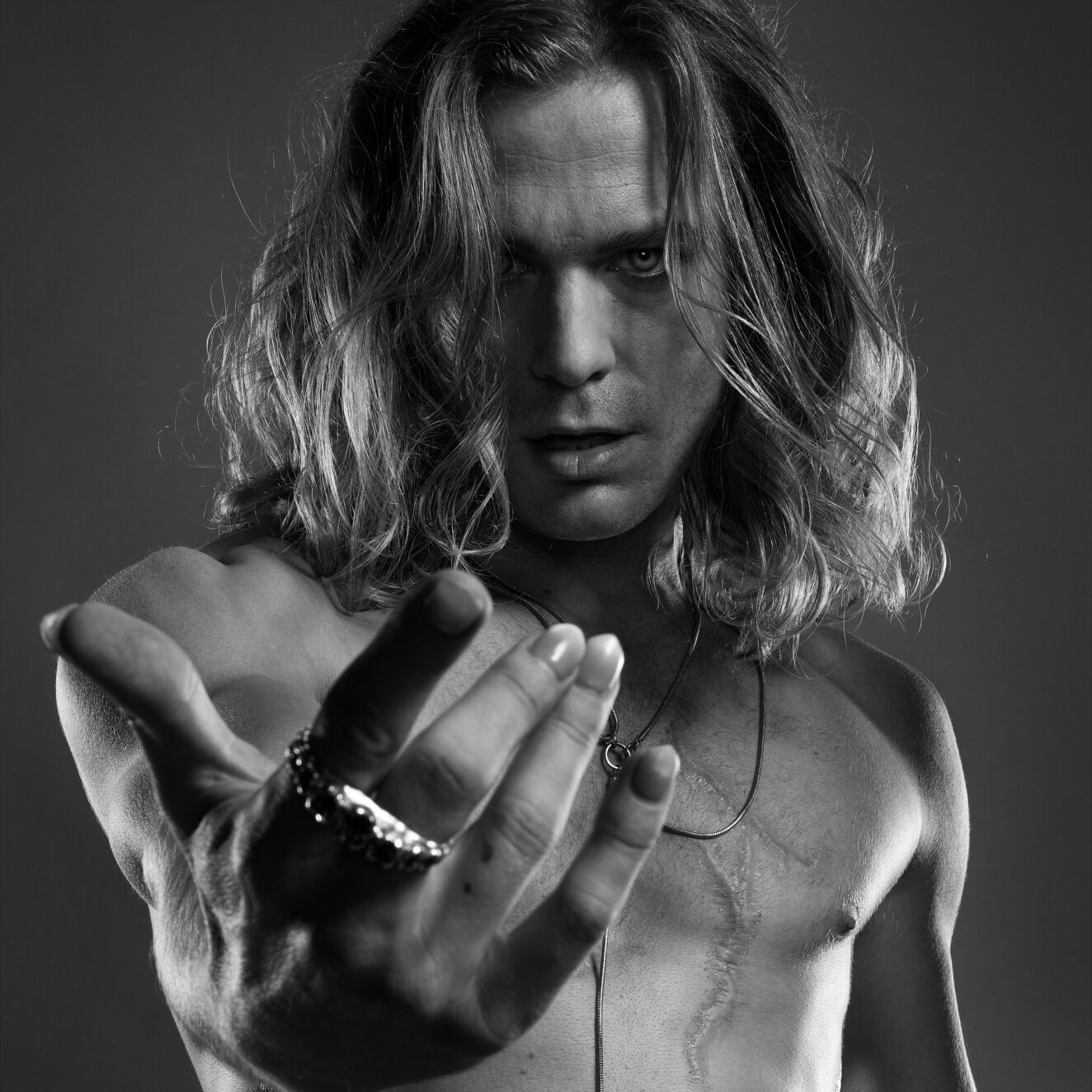
The lyrics hint at it —“let’s sink another drink… give me time to think”— and the trailer visuals, as well as some of the other smaller clips AMC has been sharing over the last couple of weeks, seem to follow suit. Whatever this era of Lestat’s life becomes, it doesn’t read as fulfillment. It’s more of a coping mechanism. And a really bad one.
Ultimately, what “Dancing With Myself” captures, and what the trailer reinforces, is that Lestat isn’t just alone, but he is alone without the one person whose love ever made that loneliness bearable.
And until that changes, no amount of noise, attention, or performance is going to fix it.
Because change will be required from both of them. From Lestat, a confrontation with who he is beneath the performance; from Louis, a willingness to face what remains between them.
And when that shift finally comes, it will be beautiful and probably send me into a psychosis.
But until then, the lyrics linger where Lestat is now: searching, performing, and still, despite everything, waiting for Louis’ love.
Conclusion
What makes this trailer so effective isn’t just what it shows, but how it sounds. The choice of “Dancing With Myself” is deliberate, layered, and deeply revealing of Lestat’s mental state during what will probably be the beginning of his journey to rockstardom. Through its lyrics and tone, the song reframes everything we’re seeing: Lestat’s rise to fame as a performance, his excess as coping, and his isolation as something that no amount of attention can truly resolve.
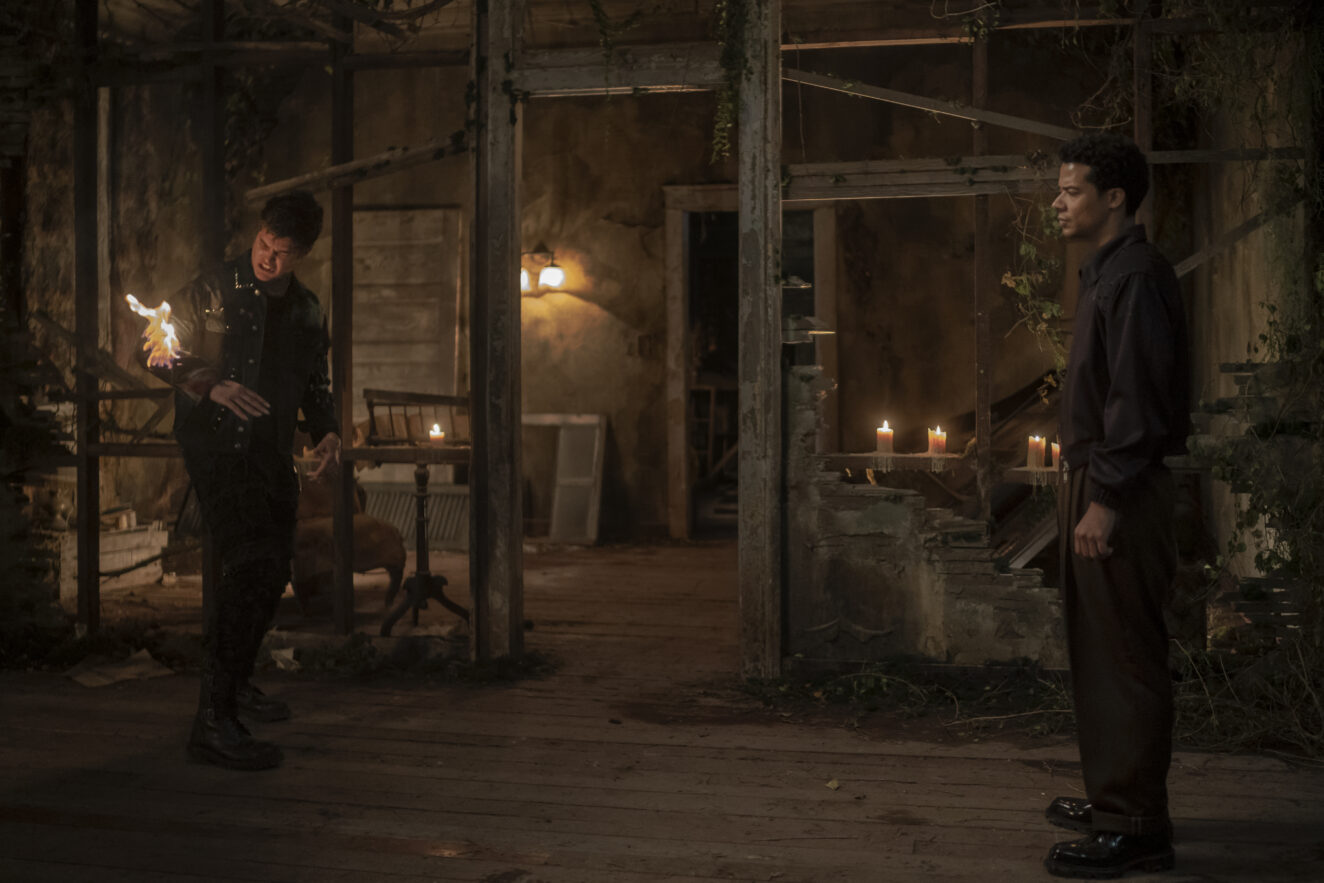
Loneliness, performance, and the absence of meaningful love aren’t just recurring themes in Interview with the Vampire, but now something embedded directly into the music of this trailer, guiding how we interpret nearly every frame, character action, and piece of dialogue. It’s a reminder that this next chapter, The Vampire Lestat, isn’t just about reinvention but exposure.
And if this trailer and its music are any indication, we’re in for something messy, emotional, indulgent, and probably devastating in all the best and worst ways.
This might be me reading way too much into a trailer song choice, but I don’t think I am. To quote OutKast in “Hey Ya!:” “Y’all don’t wanna hear me, you just wanna dance.”
And if that isn’t exactly what this trailer is doing, I don’t know what is.
All I do know is that June 7 cannot come fast enough.
In the meantime, you can watch the official trailer below and listen to “Dancing With Myself” by The Vampire Lestat to hear exactly what he’s telling us.
Be sure to follow us here at iHorror for our upcoming breakdown of the trailer’s visual content — we’re covering all things The Vampire Lestat as we count down to its premiere on AMC and AMC+ on June 7 at 9 p.m.