
A24 spent the last decade as the studio horror fans point to when someone insists the genre has nothing left to say. Hereditary, Midsommar, The Witch, Talk to Me, X, Pearl, Men, Saint Maud. That is a murderers’ row of strange, filmmaker-driven nightmares, and it is the reason the little A24 logo at the front of a trailer became its own kind of trust fall.
So when the studio shows up holding Google money to go play with AI, the people who built that trust are going to give it a long, narrow look.
On June 22, Google DeepMind and A24 announced what Google is calling a first-of-its-kind research partnership. Google’s framing is gentle and very on message. The collaboration, it says, pairs “a world-leading research lab with the industry’s most filmmaker-forward studio to help artists develop new workflows and techniques,” so that “the tools of the future are shaped by the creators who use them.” Tucked into that same announcement, almost as a footnote, is the line that actually made the headlines: “Google has made an investment in A24.”
What the deal is, and what it is not

Multiple outlets put that investment at roughly $75 million. Variety reports the figure is in line with what Thrive Capital put in during A24’s last funding round, and notes it is Google’s first direct stake in a film studio. Deadline frames it as a multi-year R&D effort aimed at new tools for both filmmaking and distribution. An early project, according to the AV Club, is using AI to generate storyboards, the rough visual sketches directors use to block out a scene before they shoot it.
Here is the part worth saying clearly, because the panic version of this story skips it. Google is not buying A24. The studio stays independent. The deal is also reportedly non-exclusive, which means A24 can keep working with other AI outfits and DeepMind can keep working with other studios.
And per The Hollywood Reporter, the agreement does not hand Google access to A24’s content library or its data. That last detail matters more than anything else in the announcement, so file it somewhere you can find it again.
Why this one lands differently for horror fans
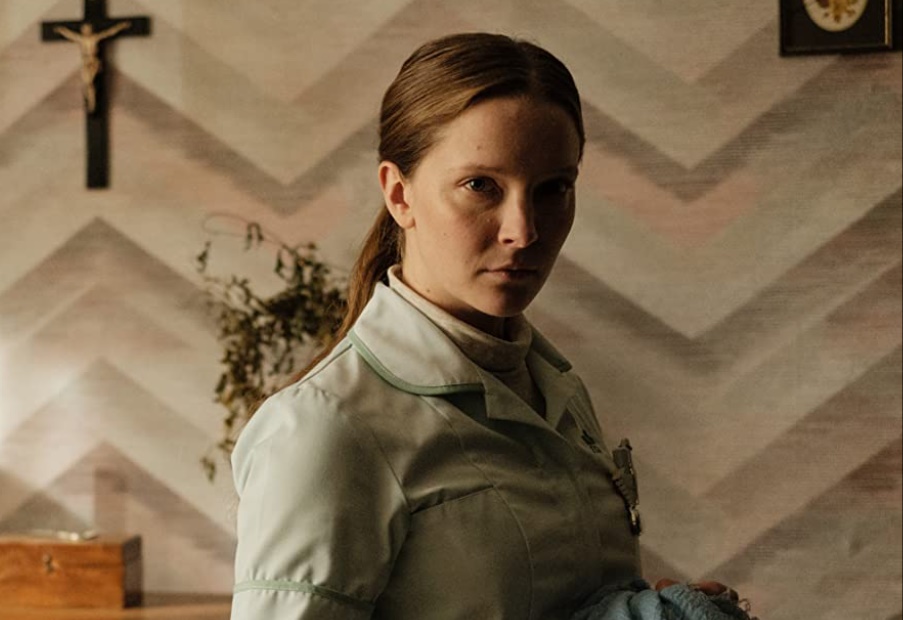
Every major studio is taking AI meetings right now. The reason this particular handshake stings is that A24 sold itself as the alternative to all of that. This is the studio that let Ari Aster hold on a grieving mother’s face until you wanted to leave the room, that let Robert Eggers spend a fortune getting 1630s dialogue correct for a movie about a goat. The brand is “we trust the weird people.” Google is not weird. Google is the haunted house’s new co-signer insisting it definitely knows where the light switches are.
A24’s tech lead Scott Belsky has told IndieWire the studio’s approach is meant to be different from the cheaper-faster pitch other AI deals lead with, and that whatever comes out of it “won’t look anything like the prompted generation type of AI that people feel uncomfortable with.” Maybe. Intentions are easy to announce and harder to keep once a $75 million partner wants to see returns.
The bigger thing in the room

This deal does not arrive in a vacuum. It lands in an industry still raw from the 2023 writers’ and actors’ strikes, where AI was the fight, not a footnote. The open questions have not closed. Who owns a storyboard a machine generated from a director’s notes. Whose labor gets quietly absorbed when the previz artist, the VFX house, the marketing team, and the trailer editor all get an AI middle layer. What “creative control” means when the tool comes pre-loaded by the company cutting the checks.
Storyboarding and visual effects are the obvious entry points. Distribution and marketing are the quieter ones, and arguably the more consequential, because that is where a small handful of decisions shape what millions of people ever get the chance to see.
To be fair, and horror history backs this up, tools are not the enemy. The genre has always run on clever people doing more with less. The Blair Witch Project was a camcorder and nerve. Practical effects artists turned latex and karo syrup into trauma that still holds up. If AI stays a brush in an artist’s hand rather than the hand itself, a research partnership could genuinely take grunt work off filmmakers who never had a Marvel budget to begin with. The whole thing turns on one word, and that word is “if.”
Horror has spent a hundred years telling the same warning in different masks. The monkey’s paw grants the wish. The deal with the thing in the woods always has a clause nobody read closely. The convenience arrives first, and the bill arrives later, usually around the third act, usually when it is too late to give the thing back.
A24 just signed something. The genre it built its name on has a pretty consistent opinion about what happens next.