
Is there a cultural reason why kids getting killed is no longer taboo in genre films?
When I was growing up there was sort of an unstated rule for horror movies; you could technically kill off kids in genre films, but you could never actually show the kids themselves being killed. Now, you might see a dead body after the fact, but the idea of active child murdering in front of the camera was strictly taboo.
I’m sure there are exceptions. There’s probably a handful of movies from the ‘70s and ‘80s that do depict active child murder — Assault on Precinct 13 immediately comes to mind, but calling it a “horror” movie in the traditional sense might be a bridge too far for some viewers — but by and large, you could watch a horror movie back then and know that the kids in said films were (almost always) off limits. And if they were dispatched for the sake of storytelling, it would almost certainly happen off-screen, or through an obfuscated lens or some other kind of narrative trickery that implies simulated child murder without actually showing simulated child murder.
Well, fast forward to today and kids are getting massacred left and right in horror flicks. And we’re not talking fringe indie productions, either, we’re talking mainstream, big-budget, monolithic studio pictures. You can watch children get stabbed to death in slow motion in Doctor Sleep or watch them get eviscerated en masse in Terrifier 3 or view them getting their heads knocked clean off their shoulders in the latest V/H/S/ entry.
Needless to say, the taboo isn’t much of a taboo anymore in horror films.
Immediately, two questions come to mind. First, when exactly did the taboo go away and more importantly, what made it go away in the first place?
Before you search for an answer there, I think you have to address two larger trend lines in the film industry. First, the Motion Picture Association of America has never been as lenient as it is today when it comes to onscreen violence. You can watch a movie like The Monkey and it has more gore, bloodshed and grotesque human carnage in a 90-minute package than you’d get out of the first eight Friday the 13th movies combined. I watch a film like Final Destination: Bloodlines — with its nonstop parade of impalements, dismemberments and arterial explosions — and it’s hard to imagine a film of its ilk not getting a NC-17 rating circa 2000 … or maybe even 2010, for that matter. The MPAA clearly doesn’t care as much about cinematic violence and bloodshed as it did just ten or 15 years ago, so I suppose the whole “kids being murdered before our very eyes” thing is sort of a natural extension of where the prevailing censorship headwinds were already blowing. Still, it’s a shock to me that it happened so abruptly. Like, there wasn’t a slow transition here, at some indeterminable point in the 2010s we all kinda of culturally agreed that cinematic child murder was no longer a problem. And the kindergartner guts started hitting the floor just like that.
Now, the second bullet point here is that one of the reasons why the film industry is permitted such incredible displays of cinematic violence today is because of competition from other forms of media. We were already seeing absurd amounts of blood and guts and depravity on TV shows like Game of Thrones, and it didn’t take long for studio executives to realize that if excessive mayhem was alright in one medium, it might as well be fair game for another one. And we’re not even taking into consideration the enormous amount of violence in popular video games — which already had a built-in youth audience, despite that whole “rated M for Mature” caveat — and the easily accessible REAL LIFE violence coursing through the internet as “entertainment.” Odds are, middle schoolers circa 2016 had already seen people getting their arms hacked off for real on LiveLeak or experienced the horror of a real life ISIS snuff film, and once that’s become normalized the gruesome murder of non-existent children in fake movies is pretty much small potatoes.
So culturally, I think the argument is pretty straightforward. We’re exposed to more real-life violence, therefore our multimedia entertainment reflects it. This has happened before, most demonstratively in the wake of the Vietnam War. For the first time ever, Americans were seeing real-time images of their sons getting mulched alive by machine gun fire and seeing burnt bodies dragged out of twisted metal on the nightly news. And virtually over night, the cinema of the 1960s went from My Fair Lady to The Wild Bunch.
There’s that question of desensitization that’s hard to tackle in a topic like this. But after so much exposure, all of that shock and horror does become a little mundane. Watching Michael Myers chase people around Haddonfield with steak knives doesn’t really have the some existential connotation to it when you’ve watched thousands of people get incinerated on 9/11, or watched countless poor minorities drown during Hurricane Katrina, or witnessed the charnel house madness of the Global War on Terror on a daily basis for an entire decade. You might write the cinematic child murder off as a natural upping of the ante, but I don’t think you have to look very hard to pinpoint a real world tipping point.
December 14, 2012. Newtown, Connecticut.
The Sandy Hook Elementary Massacre was the point of no return for American society. When it happened, we were gutted by the terror and tragedy of it all. Little five-year-old and six-year-old babies, being massacred in an AR-15 holocaust. If that wasn’t a wake up call for America to get its head out of its ass and do SOMETHING about the public health crisis of firearm violence, I don’t know what is.
But sure enough, nothing happened. No major federal legislation was passed and on the state level, gun control policies actually got less restrictive in the MAGA belt. It was right then that I realized that America had made its choice — a classroom of bullet-riddled children was a fair enough tradeoff for the luxury of owning semi-automatic rifles. And it henceforth become a political live wire that not even the gutsiest of Democrats dare tread.
Then Parkland happened. Then Santa Fe. Then Uvalde. The mass executions of children had become normalized in American politics and collectively the national response was … thoughts and prayers and nothing more than that.
Today, every elementary student in America has to live with the knowledge that some aggrieved sociopath could walk into their classroom and mow them down at any moment. And with half the electorate convinced that gun control shouldn’t begin until the first corpse hits the carpet, you really can’t say their existential horror is unfounded.
In that, I guess it’s not much of a surprise that fictitious horror movies started showing us child murder writ large. Movies simply reflect reality and what we’re already seeing on a daily basis. And I guess as a society, we stopped being shocked by the idea of murdered children a long time ago.
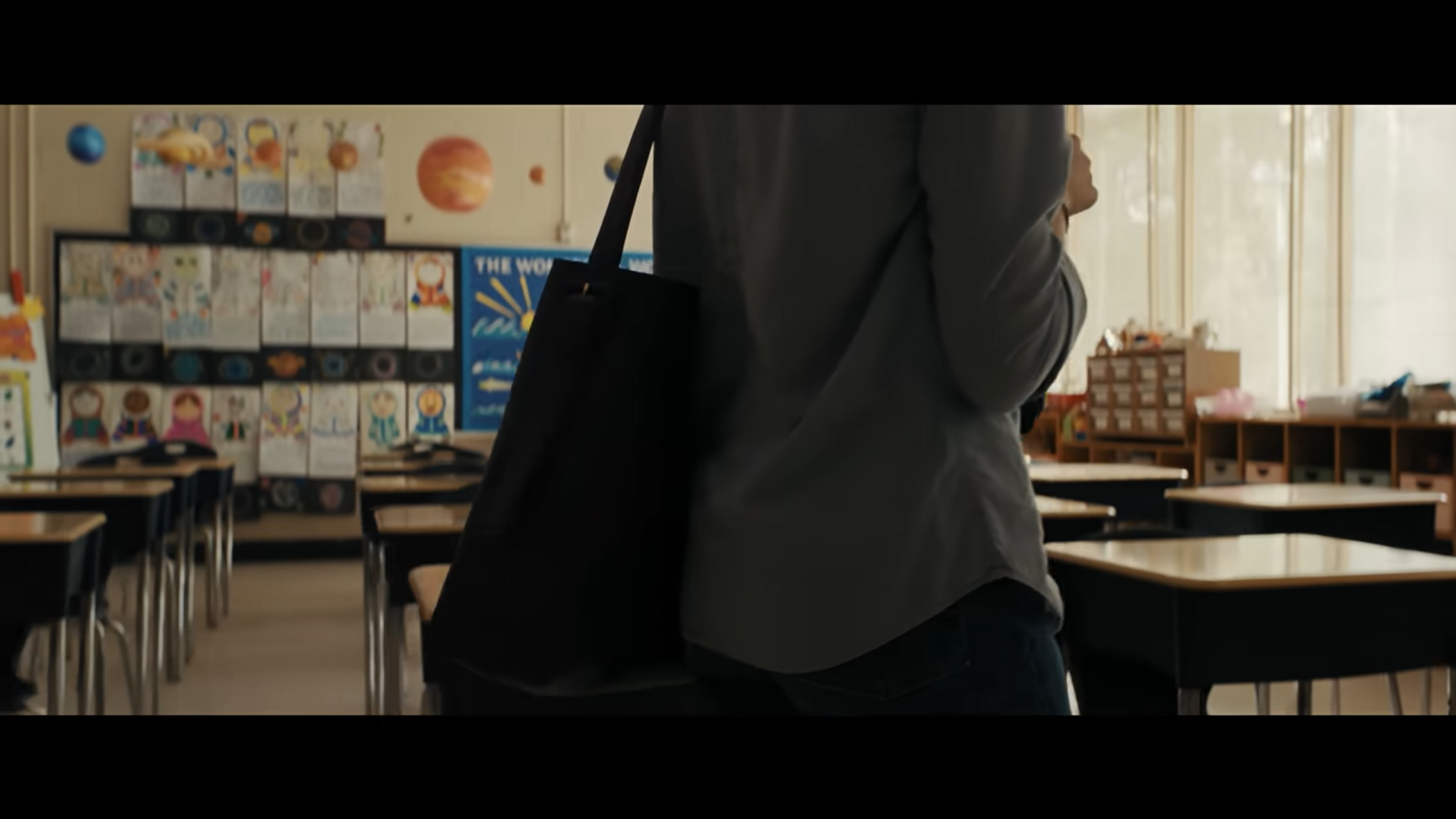
That’s why a film like Weapons is so frustrating to me. Here’s a movie that seems like an obvious metaphor for America’s epidemic of school massacres, only for the director to wuss out halfway through and go “nah, just kidding, it’s a witch behind everything.”
We’re supposedly living in the era of “socially cognizant” and progressive horror films. We’ve seen critically acclaimed box office successes like Sinners and Get Out tackle racism, we’ve seen movies like Midsommar and A Girl Walks Home Alone At Night address misogyny and we’ve seen films like I Saw The TV Glow and Carnage for Christmas delve into the horror genre’s unsavory track record with trans identity and inclusion.
But here we are, still waiting for somebody to have the guts to make a horror movie about the real world slaughter of the innocents that haunts the United States like a modern day Moloch.
Ultimately, I get the feeling that the relatively recent trend line of active child murder in mainstream horror movies isn’t so much a form of condemnation as it is just another indication that American society has become desensitized to the once unthinkable. The movies just reflect the current mood in culture; and apparently, 20 or 30 massacred kids is just another day in the U.S.A.